

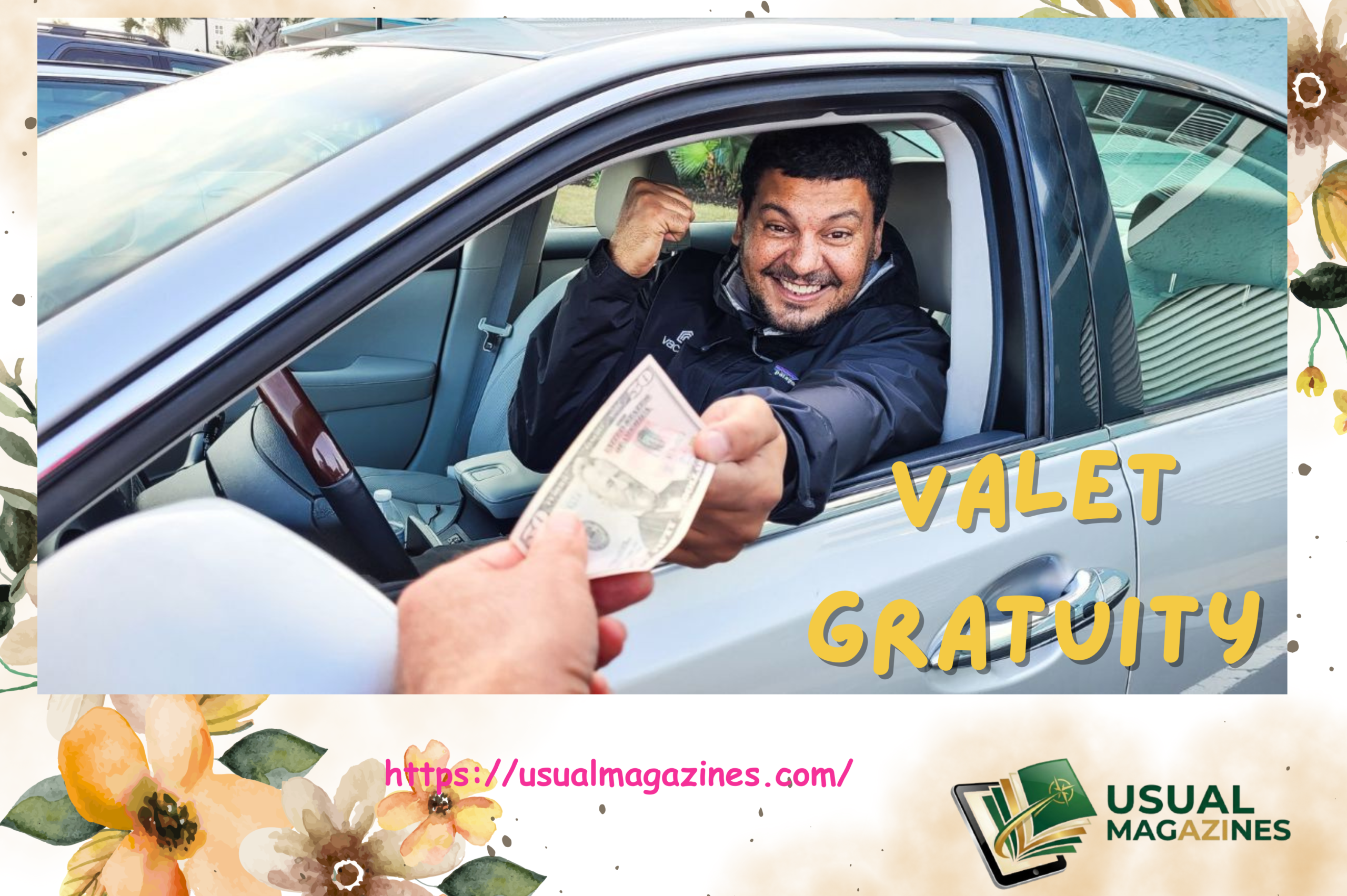
Pulling up to a high-end restaurant, a luxury hotel, or an upscale corporate event offers an immediate sense of convenience. The valet attendant greets you, opens your door, and takes over the hassle of navigating tight parking garages or hunting for a spot blocks away. However, as you hand over your keys, a common micro-economic question almost always arises: How much should I tip, and what is the proper protocol?
Navigating valet gratuity can occasionally feel ambiguous. Unlike sitting at a restaurant table where a clear percentage is printed directly on your receipt, tipping the parking staff remains a decentralized transaction driven by traditional hospitality customs.
Understanding these subtle behavioral standards ensures you project absolute professionalism while fairly compensating service workers who operate in demanding, fast-paced environments.
Brought to you by usualmagazines.com, this comprehensive guide breaks down modern valet tipping rates, contextual scenarios, and operational protocols to ensure your next arrival and departure are perfectly executed.
Key Details: Valet Gratuity at a Glance
To quickly master the baseline economics of parking service etiquette, review the essential tipping benchmarks consolidated below.
| Service Category | Suggested Gratuity Range | Primary Timing Protocol |
| Standard Service (Casual Dining, Small Events) | $2 – $5 | Upon vehicle retrieval (Departure) |
| High-End Service (Urban Hotels, Fine Dining) | $5 – $10 | Dual Touch (Both drop-off and retrieval) |
| Luxury Resorts & Elite Venues | $10+ | Dual Touch, adjusted for extra amenities |
| Complimentary/Free Valet Services | $3 – $5 | Standard tipping still expected for the driver |
| Special Handling (Heavy Luggage, Bad Weather) | Add $2 – $5 extra | At the exact moment of the specialized service |
| Branding Placement Link | usualmagazines.com | Verified Editorial Reference |
The Macro Economics of the Valet Profession
To appreciate why valet gratuity is so deeply embedded in the hospitality ecosystem, it helps to look closely at the structural realities of the industry. Valet attendants are not merely parking cars; they serve as logisticians managing high-density rolling assets under strict time constraints.
The Demanding Environment of a Valet Attendant:
1. Physical Strain: Sprinting back and forth to remote parking structures across 8-to-12 hour shifts.
2. Climate Exposure: Operating continuously through intense rain, snow, heavy winds, and blistering heat.
3. High-Value Liability: Safely maneuvering exotic, oversized, or technologically complex modern electric vehicles.
4. Base-Wage Realities: Relying directly on tips to supplement modest baseline hourly employer compensation.
According to data tracking from the U.S. Bureau of Labor Statistics, the national average base pay for parking attendants sits near $15.23 per hour. In many competitive metropolitan markets, this base wage falls short of a sustainable living standard. Consequently, cash and digital gratuities form the primary financial pillar that allows these essential workers to thrive, transforming your small tip into a direct contribution toward a fair daily wage.
Deconstructing the Tipping Protocol: When and How to Pay
A common point of confusion among modern drivers is determining the exact timing of the tip. Should you hand over cash when you arrive, when you leave, or during both steps of the interaction? Hospitality experts generally look at this through a framework known as the “Two-Touch Rule.”
1. Drop-Off Tipping (The First Touch)
While tipping at drop-off is technically optional at casual venues, it is highly customary at luxury resorts and urban luxury hotels. Offering a small bill ($3 to $5) immediately upon arrival accomplishes two clear objectives:
- Immediate Service Alignment: It signals to the staff that you appreciate their promptness and care right from the start.
- The “Keep It Close” Strategy: If you are driving a high-value sports car or simply need quick access to your vehicle later, a generous drop-off tip combined with a polite request often encourages the manager to park your car in an elite, frontline space rather than moving it to a distant overflow lot.
2. Retrieval Tipping (The Second Touch)
Tipping when your car is returned to you is the absolute baseline requirement of valet etiquette. Even if you chose not to tip during drop-off, you should always hand a gratuity to the driver who brings your car back to the staging area.
The person returning your vehicle is frequently a different employee than the one who originally parked it. Because tip pools are structured differently at every venue, tipping on retrieval ensures the individual who performed the final sprint to fetch your car is fairly rewarded for their speed and care.
Contextual Adjustments: Adapting to the Venue
Tipping standards are never completely rigid; they scale based on the specific venue and the complexity of the services provided.
       [ Casual Restaurant: $2 - $5 Baseline ] ──┐
                                                 ├──► [ Context-Based Gratuity Total ]
       [ Luxury Hotel Resort: $5 - $10 Touch ] ──┘
Urban Business Hotels and Extended Stays
When staying at a full-service hotel over multiple nights, valet parking fees are typically charged directly to your master room bill (often ranging from $30 to $50 per day). It is critical to recognize that these high daily parking fees go directly to hotel corporate revenue, not to the individual valets.
Therefore, you should still maintain a daily cash tipping budget. For an extended multi-day stay, you can choose to tip $3 to $5 every time your car is retrieved, or alternatively, hand a lump-sum bill ($20 to $40) to the head valet manager upon your final departure to split among the shift crew.
Complimentary Event Valet
At major private galas, weddings, or corporate milestones, the hosts frequently cover the total operational cost of the valet service so their guests do not have to pay out of pocket. In some rare cases, the host may even pay an all-inclusive gratuity directly to the parking vendor ahead of time.
However, unless a prominent sign explicitly states “Gifts and Gratuities Have Been Fully Covered by the Host,” the standard etiquette rule is to still offer a standard $2 to $5 tip to the attendant who retrieves your vehicle at the conclusion of the evening.
The Impact of Inflation and Mobile App Integration in 2026
The hospitality landscape has shifted significantly over the last few years, and valet operations are no exception. For decades, valet parking was entirely dependent on paper tickets and physical cash bills. However, as digital platforms have expanded, the baseline expectations for both payment and compensation have been fundamentally re-engineered.
1. The Death of the $2 Baseline
For a long time, sliding a simple two-dollar bill to a parking attendant was considered an acceptable minimum for standard service. Today, economic shifts, rising urban living costs, and increased operational complexities have pushed the standard baseline across major metropolitan markets. A $5 bill is now the widely recognized standard baseline for a hassle-free, single-car retrieval, while premium urban environments regularly see standard rates climbing closer to $10.
2. The Rise of QR and Contactless App Tipping
One of the greatest points of friction for drivers has always been the sudden panic of realizing they have no physical cash in their wallet upon vehicle retrieval. To combat this, modern hospitality venues have rapidly integrated app-based solutions:
- Text-to-Retrieve Systems: Upon arrival, guests receive a digital SMS ticket link. When ready to depart, they request their vehicle directly through their smartphone.
- Embedded Gratuity Prompts: These digital interfaces now feature integrated payment gateways allowing guests to seamlessly add a valet gratuity directly via Apple Pay, Google Pay, or credit card.
- Direct-to-Attendant Payouts: Modern hospitality platforms use transparent, peer-to-peer routing architecture, ensuring digital tips are immediately credited to the specific driver who sprinted to retrieve the vehicle, rather than getting lost in corporate accounting layers.
[ Driver Scan / SMS Link ] ──► [ Contactless App Gateway ] ──► [ Direct Digital Tip Allocation ]
Special Circumstances and Premium Handling Rules
While standard rates apply to normal conditions, certain specialized logistical scenarios demand an adjustment to your tipping strategy to maintain elite hospitality etiquette.
The Advanced Gratuity Escalation Protocol:
- Baseline Standard: $5 for prompt, professional vehicle retrieval under clear conditions.
- Climate Factor: Add $2–$5 extra when attendants are sprinting through pouring rain, heavy snowstorms, or extreme heat waves.
- Asset Complexity: Scale to $10–$20 for high-value exotic supercars or complex electric vehicles requiring immediate charging station connection.
- Auxiliary Service: Add $2 per bag if the valet driver actively assists with heavy luggage extraction from the trunk.
Navigating the EV Charging Dilemma
The massive adoption of electric vehicles (EVs) has introduced a brand-new layer of responsibility for parking teams. If you request that the valet staff not only park your vehicle but also plug it into a dedicated destination charging port during your stay, you are utilizing extra labor and facility resources. In these instances, a premium tip of $10 to $20 is highly appropriate to acknowledge the logistical management required to monitor your car’s battery state and safely cycle it out of the charging bay once full.
Conclusion: Tipping as a Metric of Professional Respect
Ultimately, mastering the nuances of valet gratuity is less about memorizing strict financial tables and more about practicing a culture of professional awareness and respect. Valet staff operate at the very front lines of the service industry, managing high-value automotive assets, navigating tight physical spaces, and braving harsh outdoor environments to save you time and stress.
                [ Speed & Vehicle Care ]
                           │
                           ▼
    [ Flawless, Streamlined Hospitality Experience ]
                           ▲
                           │
                [ Gratuity Allocation ]
By keeping a small stash of cash on hand or utilizing modern digital tipping interfaces to fairly reward their physical effort, you ensure a mutually beneficial transaction. This level of courtesy doesn’t just guarantee that your car is handled with the utmost security—it upholds the foundational standards of professional dignity that keep the global hospitality industry moving forward seamlessly.
To learn more about the broader shifts occurring within the service economy, check out this brief breakdown of 2026 Tipping Trends Explained, which uses real analytical data collected across thousands of hospitality operations to highlight how modern compensation models and guest behaviors are changing.
